Smart Memories
A reconfigurable multiprocessor architecture exploring how shared-memory, streaming, and transactional models could use a common set of hardware resources.
View the test-chip gallery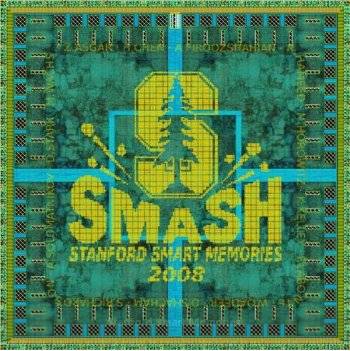
Technology leadership · Silicon Valley
Senior Director, AI SoC Architecture at Intel
I lead a team of experts who use a range of modeling techniques to project power and performance for modern AI workloads and hardware. Our work informs AI-system and SoC definition and helps design teams optimize power and performance across product IPs throughout the product lifecycle.
California, United States
Email

Areas of focus
Foundational areas · Memory coherence and consistency · Reconfigurable computing · Parallel programming models
My interests center on computer architecture, especially AI accelerators, custom processors, and high-performance memory systems. I’m particularly interested in how architectural choices and programming models shape performance, efficiency, and scalability.
01 — Background
At Stanford, I completed my Ph.D. in Electrical Engineering in 2009 while working on Smart Memories, a reconfigurable multiprocessor research chip.
At Hicamp Systems, I worked on novel memory-system architecture to improve effective memory capacity, and later continued that work at Intel on Xeon server platforms.
At Meta, I helped define and realize the first three generations of Meta’s Training and Inference Accelerator (MTIA), leading and contributing to work on custom RISC-V processor extensions, memory-system architecture, and performance simulation. At Rain AI, I led architecture definition and simulation for a digital compute-in-memory (DCIM)-based AI accelerator.
The Smart Memories test chip received first prize in the 2009 DAC/ISSCC Student Design Contest; a HICAMP architecture paper received the 2012 ICS Best Paper Award.
See selected photosSelected projects
A reconfigurable multiprocessor architecture exploring how shared-memory, streaming, and transactional models could use a common set of hardware resources.
View the test-chip gallery
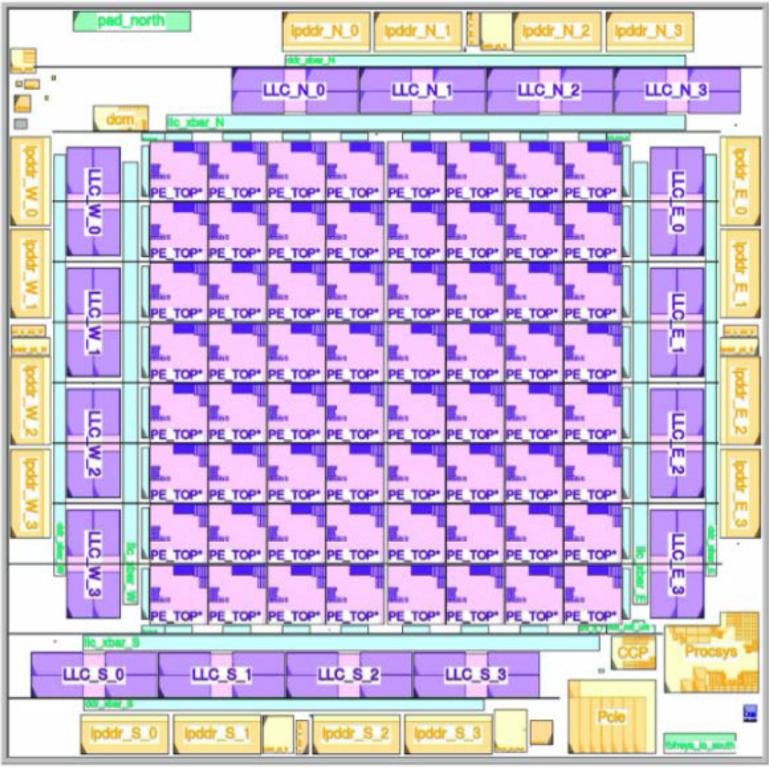
Meta’s first-generation Training and Inference Accelerator, targeting recommendation workloads.
02 — Education
Further resources